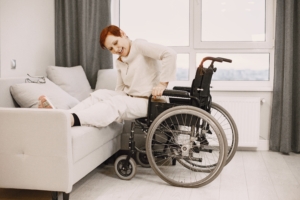
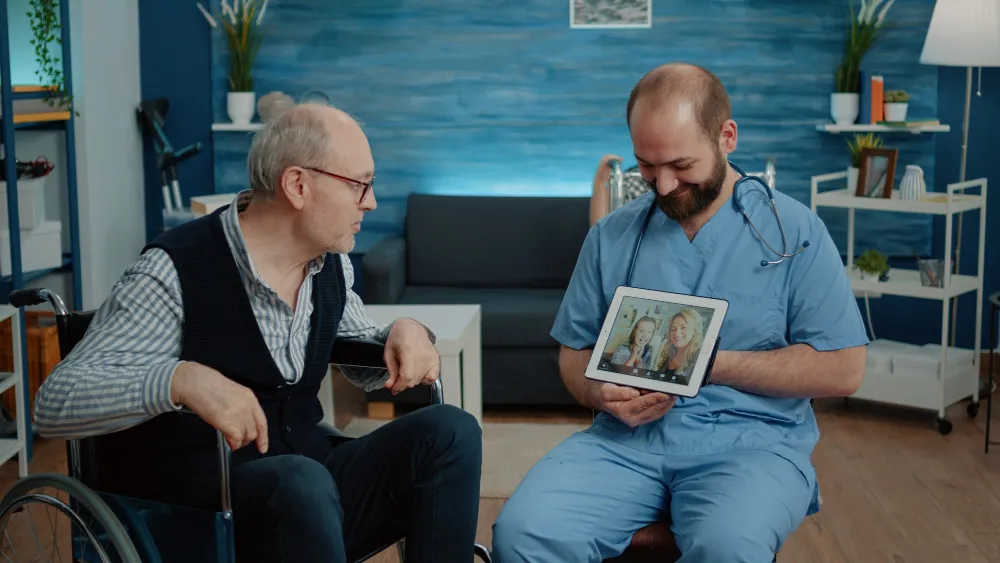
After major surgery, the question is not always whether you can recover at home. It is whether you should. For many people, recovering at home is the right answer. The familiar surroundings, your own bed and family close by are real advantages when you’re recovering from a major surgery. For others, a few weeks of professional supported recovery makes the difference between steady progress and a frustrating setback.
If you are reading this on behalf of a parent or partner who has an operation coming up, you are probably weighing something you have not fully put into words yet: will they actually cope at home or are we hoping for the best? In this guide, we’ll explore recovering at a short-term convalescent home vs recovering at home. We will explain which situations usually suit recovery at home and which usually suit a convalescent stay. We will also give you a useful decision checklist to help you come to the right conclusion whether you are looking for yourself or for the person you are caring for.
There are only a few dedicated convalescent homes left in the country and Rustington Convalescent Home on the West Sussex coast is one of the few. It was purpose-built for convalescence in 1897 and effortlessly blends a fascinating history with modern facilities and far-reaching sea views. It is a wonderfully peaceful, relaxing place to recover after a hospital stay or for respite care knowing nursing staff are on hand day and night whenever you need them.
What Does Recovering at Home Actually Involve?
Recovering at home after surgery is what many people picture. You probably feel you will sleep better in your own bed, you can eat your regular type of food and your family and friends can drop in whenever they want. That emotional comfort has a real effect on how well people recover.
It is also cheaper on paper: there are no weekly fees. But “cheaper on paper” doesn’t always account for the total cost. Here are three main points you should consider when thinking about recovering at home after surgery or a hospital stay because home recovery has costs that do not appear on any invoice.
The Practical Load
The reality is that someone will need to step in and help with things your parent or partner are unlikely to be able to do immediately after being discharged from hospital. If you are the person going through surgery yourself, the same issues will arise. In the first couple of weeks, that typically means you will need help with washing and dressing, preparing three meals a day, managing medication, checking wounds and doing laundry and shopping. It is also advisable to have someone available overnight to help you as and when needed.
You should also take a moment to consider your home. Homes that work perfectly well normally can become like an obstacle course for you after an operation. For example, stairs between the bedroom and the only bathroom, a bath rather than a walk-in shower or doorways too narrow for a walking frame may cause issues.Occupational therapists can usually arrange rails, a raised toilet seat or a temporary downstairs bed, but make sure you book this in plenty of time and definitely organise it before the operation, not after.
Getting to Appointments
It is obviously important for your recovery that you attend every follow-up appointment and any physiotherapy that has been booked for you. NHS guidance is to wait at least six weeks before drivingafter a hip replacement or atotal knee replacement and at least three weeks after a partial knee replacement. Of course, you will need to check with your doctor or medical team that you are fit to drive before you start again which will include, for example, ensuring you are able to perform an emergency stop comfortably. In the meantime, make sure you have enough support to take you to the appointments whether they are physiotherapy, general wound checks or follow-up clinics.
The Cost Nobody Budgets For
It is worth considering that the main hidden cost of home recovery is the availability of help from family and friends. Of course, most family and friends are more than happy to help when they can. However, you will need to factor in things like whether a spouse is able to take unpaid leave or is physically able to help you; if your adult child can make space in their own timetable; if and when friends are available to pop in regularly. Sorting out who can look after you and what type of help they are best at before you start your recovery at home will make your convalescence much smoother and less stressful.
None of this makes home recovery wrong. It just means there is more than just the monetary cost to take into consideration when you are deciding which type of care will best suit you after you have been discharged from hospital.
What Is Convalescent Care?
Convalescent care is an option many people do not know exists, which is why so many families search for “what is a convalescent home” or “what is convalescent care” only after a difficult discharge.
Convalescent care is short-term accommodation and care focused entirely on recovery irrespective of how and when you are discharged from hospital. Think of it as a stepping stone between hospital and home. You are past needing a hospital ward but not yet steady or confident enough to manage alone. A convalescent home covers the gap.
A typical stay lasts one to two weeks, sometimes longer depending on the operation. That is the defining feature: convalescent care is short term so it has an end date. You go home when you feel fit and able to look after yourself without support.
What Is Included in Convalescent Care?
A stay in a post-operative care home usually covers:
A private room often with an en-suite bathroom
All meals, refreshments and snacks, with dietary requirements catered for
Help with washing, dressing and daily personal care
Registered nurses and carers on hand day and night
Medication management
Access to a GP if needed
Communal lounges, gardens and activities if you want them
Post-operative rehabilitation and convalescent care work together. Physiotherapy, chiropody and similar services are usually optional extras rather than being bundled into the fee so ask the convalescent home exactly what is included through an itemised quote before booking a stay.
How Convalescent Care Differs From Other Options
People often ask what convalescent homes are compared with the alternatives.
A hospital treats acute (serious) medical problems
A nursing home or residential care home provides long-term care, often permanent, for people whose needs are unlikely to be resolved
A convalescent home sits between the two: it offers short-term, recovery-focused care and is built around the expectation that you will get better and go home.
Each option of where to stay after being discharged from hospital has its own advantages. Here is an easy-to-see comparison between recovering at home and recovering in a convalescent home.
Factor
Recovering at home
Convalescent care
Direct cost
No fees
A weekly fee applies
Hidden cost
Family time, dependence on others, unpaid leave, travel to appointments, equipment
Travel to and from the convalescent home
Safety at night
Depends on who is there
Staff awake and available 24/7
Nutrition
Depends on who cooks
Three meals prepared daily
Mobility support
Family plus any aids arranged
Lifts to all floors, wet rooms, staff on hand
Social contact
Familiar people but can be isolating
Other guests and staff throughout the day
Comfort and familiarity
Hard to beat
Unfamiliar at first
Impact on family
Significant and sustained
Minimal during the stay
Flexibility and control
Complete control, flexibility depending on helpers
Set mealtimes and routines
Recovery focus
Competes with normal household life
The only thing on the agenda
Looking at the table above, the pattern becomes clear: the right option is personal to you and depends on your individual needs, the amount of help you have available at home and your preferred route to recovery.
When Home Recovery is the Right Choice
To make the decision easier between choosing recovering at home or convalescent care, the home option tends to be the right option when you can say “yes” to most of the following:
I have someone who can genuinely be with me full-time or nearly full-time for the first fortnight. This means immediately on hand including overnight. This is the single biggest factor.
My home is suitable for restricted mobility. This means you ideally have a bedroom and bathroom on the same floor, a shower rather than a bath, there are no long flights of stairs and no awkward steps at the entrance OR it means you have arranged and had fitted the necessary before your operation.
I was fit and active before surgery and my procedure was straightforward. Both these points have a significant impact on the rate and smoothness of your recovery.
I can easily get to my follow-up care, physiotherapy is nearby and I have someone reliable to drive me to my appointments.
I really want to be at home to recover after my operation. This matters more than people expect. Someone who is very anxious in an unfamiliar setting may recover more slowly there and that preference should carry real weight.
If you can say “yes” to most of the statements above, then recovering home is very likely the right call for you.
When Convalescent Care Is the Right Choice
Knowing when to choose convalescent care is very much a matter of being honest about the gaps in the care you have available at home, rather than about how serious the operation was. If you can say “yes” to most of the statements below, then a post-surgery convalescent home is probably best for you.
I live alone or I live with my partner who cannot realistically provide physical support. For example, a 70-year-old spouse who wants to help may not be able to take your weight on the stairs.
My home presents real obstacles, particularly stairs between the bedroom and bathroom, which will be difficult for me to navigate after my surgery.
I have other health conditions, such as diabetes or a heart condition, which can slow healing and means my recovery needs closer attention.
My surgery was major, with a realistic recovery of three weeks or more. Hip replacements, knee replacements, cardiac surgery and abdominal operations usually fall into this group so it is very important to start your recovery the right way
I am anxious about coping or my family is anxious about being able to cope. Anxiety is not something to be dismissed: if you are a patient worried about falling, you will probably want to move less and moving less slows recovery.
The person I am thinking of to be my main carer may need to keep working or looking after their immediate family so may not be able to help me full-time
Discharge is being planned for a day when nobody can be at my home.
Booking a short stay at a convalescent home means experienced staff will take over the caring role for a couple of weeks (or more) and provide you with all the necessary equipment, pain relief and general day-to-day care so you can focus on your recovery.
The Decision Checklist
To be sure which option works best for you as an individual and to help you make the right decision, we need to take the emotion out of the equation for a second. So here is a checklist based on the important practicalities:
Will you be alone for any part of the first 7-14 fourteen days?
Do you have stairs between your bedroom and the bathroom?
Are you over 70?
Have you had a fall in the last twelve months?
Will your main carer need to leave the house for work?
Do you have diabetes, heart disease or another condition that affects healing?
Will physiotherapy or follow-up appointments require travel?
Does your bathroom have a bath rather than a walk-in shower?
Is your expected recovery period longer than three weeks?
Does anyone in your family feel anxious about coping?
Three or more “”yes”” answers is a strong signal that a convalescent stay is worth considering, even if only for a week or two. If you said “yes” to fewer than three questions then a home recovery with some practical planning is probably well within reach.
Please note that this checklist is a prompt for a conversation, not a diagnosis. Your consultant, GP or hospital discharge team knows the clinical picture and should always be part of your final decision on whether to recover at home or with convalescent care.
Combining the Two: Convalescent Care as a Bridge
Up to now, we have treated the recovery option as an “either/or “ choice so your options have been to either recover at home or recover in a convalescent care facility. However, another very good option for your recovery journey is a combination of them both.
The most common pattern at Rustington Convalescent Home is a stay of one to two weeks straight after discharge from hospital, followed by continued recovery in your own home. This works well because a stay at Rustington Convalescent Home covers the period when your support needs are highest, your mobility is at its worst and your confidence is lowest. By the time you go home, you are usually steadier on your feet, happy and confident and your care requirements are not as constant.
Staying at a convalescent home to start with also solves a practical problem. Surgery dates move and discharge sometimes happens faster than expected. A booked convalescent stay gives you a plan that does not collapse if you are sent home from hospital unexpectedly.
If cost is the deciding factor, our separate guide sets outwhat convalescent care costs across the UK, including the NHS funding routes worth asking your discharge team about.
How to Arrange Convalescent Care
When to Book
For planned surgery, enquire as soon as you are given a date by your consultant. Rooms are limited and booking ahead means you are not making decisions in a hospital corridor. Having said that, places like Rustington Convalescent Home are used to working with emergency admissions or unexpected discharges, so call as soon as you know you will need somewhere to recover to see what can be sorted out because availability varies.
Do You Need a Referral?
Anyone over 18 can enquire directly to Rustington Convalescent Home. You can get in touch by phone or email or submit your details through the website. We will then contact you to discuss your requirements and confirm we can meet your care needs. If you are hoping the NHS will fund the stay, that route starts with the hospital discharge team instead.
Great Questions to Ask a Convalescent Home
What exactly is included in the weekly fee and what costs extra?
Are there staff awake overnight?
Is there lift access and are there wet rooms for less mobile guests?
Can dietary requirements be catered for?
What is the cancellation policy if the operation is postponed?
Online searches for ‘post operative convalescent homes near me’ or ‘recovery home after surgery’ tend to be frustrating because there are now so few genuine short term convalescent care homes available in the UK.
Rustington Convalescent Home in Rustington, West Sussex has views over the sea and is set within acres of gardens. It is easy to get to with frequent trains from London Victoria to Littlehampton or Angmering and a short taxi ride from either station. Guests come from across the country to make the most of the unique setting and excellent convalescent and respite care.
As a registered charity, Rustington Convalescent Home subsidises every stay by up to 50 per cent which makes the fee charged manageable and well below what most commercial homes charge. Men and women of all ages (over 18) recover with us and you do not need to have any connection to the Carpenters’ Company to stay with us.
If you would like to book or if you have any questions, please call 01903 783368, email info@rustcon.co.uk ordiscuss a stay with us through the website.
Frequently Asked Questions
Question: What is the difference between a convalescent home and a nursing home?
Answer: The difference between a convalescent home and a nursing home is the length of stay and the purpose. A convalescent home provides short-term care, typically one to two weeks, for someone recovering from surgery or illness who expects to return home. A nursing home provides long-term care, often permanently, for people with ongoing needs.
Question: How long do people typically stay in convalescent care?
Answer: Most people typically stay in convalescent care for one to two weeks, though some guests stay longer depending on the operation and how recovery goes. A useful rule of thumb is to plan around the point when the patient can manage stairs, wash and cook independently and get through the night without help.
Question: Can I book convalescent care before surgery?
Answer: Yes, you can book convalescent care before surgery. For planned operations it is the best approach. Booking ahead means a room is held for you and you are not arranging care under pressure after discharge. Ask about the cancellation policy in case your surgery date moves.
Question: Will the NHS arrange convalescent care for me?
Answer: In certain circumstances, the NHS will arrange convalescent care for you.NHS intermediate care, sometimes called step-down or reablement, is free for up to six weeks after a hospital discharge for those who qualify and it is not means-tested. A smaller number of people qualify forNHS Continuing Healthcare. Ask the hospital discharge team while you are still on the ward because they arrange these referrals.
Question: Do I need a referral from my GP or consultant?
Answer: No, you do not need a referral from your GP or consultant to book a stay at Rustington Convalescent Home. You can enquire directly by phone, by email or by submitting your details online. We will then contact you to discuss your requirements and confirm we can meet your care needs. If we can, it is at this stage that we will ask you to speak to your GP so they can fill in a specific form so we are aware of your medical history. If you want NHS funding, the referral route runs through the hospital discharge team instead.
Question: How can I speed up healing after surgery?
Answer: The evidence on how you can speed up healing after surgery consistently points to a few basics: eating enough protein, staying hydrated, moving as much as your surgical team advises, sleeping properly and following your physiotherapy plan. Nutrition matters more than most people realise, as older adults recovering from surgery often eat too little to support healing. Always follow the guidance from your consultant, GP or physiotherapist, as advice varies by procedure.
Important Note
This article is general information, not medical or financial advice. Recovery timelines, exercises and complications vary from person to person, so please follow the guidance of your consultant, GP, physiotherapist or hospital discharge team. Fee and NHS funding information was correct at the time of writing on 22 July 2026 and may change.
We use cookies on our website to give you the most relevant experience by remembering your preferences and repeat visits. By clicking “Accept”, you consent to the use of ALL the cookies.
This website uses cookies to improve your experience while you navigate through the website. Out of these, the cookies that are categorized as necessary are stored on your browser as they are essential for the working of basic functionalities of the website. We also use third-party cookies that help us analyze and understand how you use this website. These cookies will be stored in your browser only with your consent. You also have the option to opt-out of these cookies. But opting out of some of these cookies may affect your browsing experience.
Necessary cookies are absolutely essential for the website to function properly. These cookies ensure basic functionalities and security features of the website, anonymously.
Cookie
Duration
Description
cookielawinfo-checkbox-analytics
11 months
This cookie is set by GDPR Cookie Consent plugin. The cookie is used to store the user consent for the cookies in the category "Analytics".
cookielawinfo-checkbox-functional
11 months
The cookie is set by GDPR cookie consent to record the user consent for the cookies in the category "Functional".
cookielawinfo-checkbox-necessary
11 months
This cookie is set by GDPR Cookie Consent plugin. The cookies is used to store the user consent for the cookies in the category "Necessary".
cookielawinfo-checkbox-others
11 months
This cookie is set by GDPR Cookie Consent plugin. The cookie is used to store the user consent for the cookies in the category "Other.
cookielawinfo-checkbox-performance
11 months
This cookie is set by GDPR Cookie Consent plugin. The cookie is used to store the user consent for the cookies in the category "Performance".
viewed_cookie_policy
11 months
The cookie is set by the GDPR Cookie Consent plugin and is used to store whether or not user has consented to the use of cookies. It does not store any personal data.
Functional cookies help to perform certain functionalities like sharing the content of the website on social media platforms, collect feedbacks, and other third-party features.
Performance cookies are used to understand and analyze the key performance indexes of the website which helps in delivering a better user experience for the visitors.
Analytical cookies are used to understand how visitors interact with the website. These cookies help provide information on metrics the number of visitors, bounce rate, traffic source, etc.
Advertisement cookies are used to provide visitors with relevant ads and marketing campaigns. These cookies track visitors across websites and collect information to provide customized ads.